Not the Last One Standing: Why British Horror Actresses Are Done Playing the Victim Who Survives
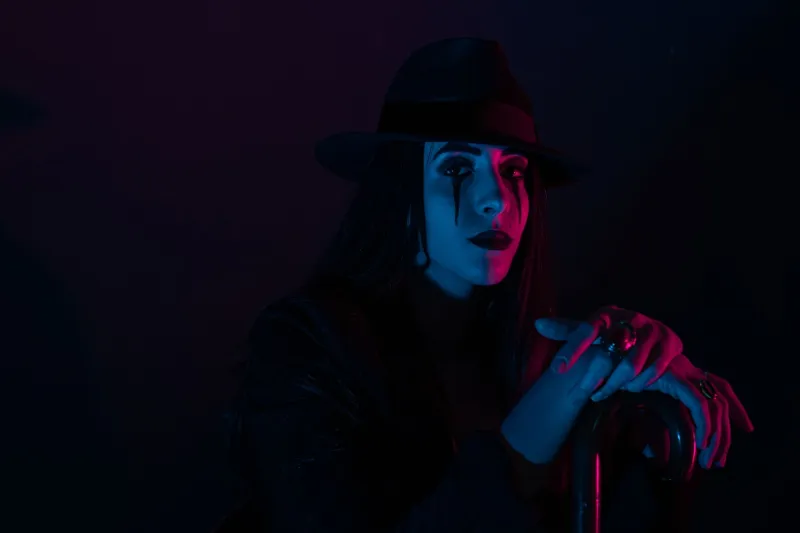
There's a specific kind of exhaustion that comes with being asked to scream convincingly for the hundredth time. Not the fun kind of exhaustion — the kind that makes you seriously reconsider your career choices at two in the morning on a cold location shoot somewhere outside Wolverhampton. For a generation of British horror actresses, that exhaustion has curdled into something far more productive: a wholesale rejection of the archetype that's governed female horror performance since the late 1970s.
The final girl — chaste, clever, and catastrophically unlucky — has had an extraordinary run. From Jamie Lee Curtis fleeing Michael Myers to Neve Campbell's seemingly endless ordeal in the Scream franchise, the template has been reliable, commercially successful, and, if we're being honest, quietly suffocating for the women asked to inhabit it. In Britain, where horror has always had a slightly different flavour — grimier, more class-conscious, more willing to sit in genuine discomfort — the pushback has arrived with particular force.
The Archetype and Its Discontents
The final girl formula is well-documented at this point. She's usually young, usually virginal in spirit if not always literally, and her survival is coded as a moral reward. She doesn't start fights; she finishes them, reluctantly, out of necessity. Her agency is reactive. Her power is earned through suffering rather than intention.
For a long time, British horror played along. The Hammer era had its own version — the imperilled ingénue in a low-cut dress — and even as the genre modernised through the 1980s and 1990s, the basic architecture held. Women in British horror were largely defined by what happened to them rather than what they chose to do.
What's changed isn't just a vague cultural mood. It's specific. It's actresses reading scripts, having conversations with directors, and actively steering towards material that refuses the passive template. Several British performers working in horror right now have spoken openly about turning down roles precisely because the female lead's function was to suffer prettily and survive. That's a meaningful shift in how the industry negotiates with itself.
Cunning Over Purity
The most interesting thing about the British horror actresses who've broken from the mould isn't that they're playing 'strong women' in the hollow, press-release sense of the phrase. Strength isn't really the point. What they're after is complexity — and complexity, in horror, often means moral compromise.
Consider how different it feels to watch a female character survive not because she's the most sympathetic person in the room but because she's the most ruthless. Or because she's been lying to everyone, including the audience, since the opening scene. Or because she is, in some meaningful sense, the thing that should be feared. These are the roles British actresses have been gravitating towards, and they require an entirely different set of skills than screaming and running.
The shift also reflects something specific about British horror's relationship with class and social anxiety. Where American horror often frames the final girl's survival as an individualist triumph — she endures because she's exceptional — British horror is more likely to ask uncomfortable questions about why someone survives. Luck, cruelty, complicity: these are the currencies of survival in the grittier end of British genre filmmaking, and women are finally being written into that moral murkiness on equal terms.
Behind the Camera, Before the Script
Some of the most revealing decisions happen before a single frame is shot. British actresses working in horror have increasingly become involved in development conversations, script consultations, and in some cases producing credits that give them genuine influence over how female characters are constructed from the ground up.
This isn't incidental. The final girl persists partly because she's easy to write — she's a function more than a person, a narrative device with a face. Getting women into rooms where the device is being designed means the conversation about why she needs to be a device at all can actually happen. Several lower-budget British horror productions in recent years have emerged from exactly those conversations, and the female characters in them are notably harder to categorise, harder to root for in the uncomplicated sense, and far more interesting to watch as a result.
Directors have noticed. There's a growing shorthand in British horror between filmmakers who want to do something genuinely strange with female protagonists and the pool of actresses who've made clear that's the territory they want to work in. It's not a formal movement — nobody's issued a manifesto — but it functions like one.
The Monster as Liberation
Perhaps the most dramatic expression of this shift is the number of British actresses who've actively sought out roles as the threat rather than the threatened. Playing a monster — whether literally or metaphorically — removes the final girl framework entirely. You're not surviving. You're the reason everyone else isn't.
There's a specific freedom in that, and several British performers have described it in almost identical terms: the relief of not having to calibrate their character's likability, not having to make sure the audience is rooting for them. Horror audiences are sophisticated enough to find compelling what they're not supposed to admire, and British horror in particular has always had an appetite for antagonists who get under your skin because they make a horrible kind of sense.
The unsympathetic female character — the one who does terrible things for comprehensible reasons, or incomprehensible ones, or simply because she can — is having a genuine moment in British horror. She's not a villain in the pantomime sense. She's something more unsettling: a woman whose story the genre is finally willing to tell on its own terms.
What Comes Next
None of this means the final girl is finished. She'll survive, appropriately enough — the archetype is too embedded in horror's DNA to vanish entirely, and there's still meaningful work being done within the framework, particularly when filmmakers interrogate rather than simply reproduce it.
But the space around her has expanded considerably, and British horror is one of the places where that expansion feels most genuine. The actresses driving it aren't making a point. They're making choices — specific, considered, sometimes career-risking choices about what kinds of women they want to spend their time being on screen.
The result is a strain of British horror that feels genuinely alive in ways the genre sometimes struggles to manage: unpredictable, uncomfortable, and populated by women whose fates you genuinely cannot anticipate from the opening scenes. That uncertainty — not knowing whether to fear her, pity her, or quietly admire her — is exactly where horror does its best work.
About time, really.