Dying of Laughter: Why British Comedians Are Finding Their Funniest Material in the Darkest Places
There's a moment in a good horror comedy where you genuinely can't decide whether to laugh or cover your eyes. Your brain is firing in two directions at once, and somewhere in that confusion lives something that feels distinctly, unmistakably British. We've always had a gift for finding the funny in the awful. Death, disease, social collapse — chuck it all in a skip and rummage around until something makes you snort. It's practically a national tradition.
What's interesting right now is how deliberately that instinct is being weaponised. British comedians aren't just accidentally stumbling into dark territory anymore. They're building entire careers at the intersection of horror and comedy, treating the genre with genuine affection while simultaneously taking the mickey out of it in ways that feel earned rather than cheap.
The Tradition Behind the Terror
To understand why this is working so well, it helps to remember that British comedy has always been comfortable sitting next to something deeply unpleasant. The League of Gentlemen didn't just gesture at horror — it dragged the audience into Royston Vasey and made them complicit in some genuinely disturbing stuff while they were laughing their heads off. Reece Shearsmith and Steve Pemberton didn't treat their grotesques as mere parody. They loved the genre too much for that. The result was something that worked as both horror and comedy without betraying either.
That lineage matters. When contemporary comedians step into this space, they're inheriting a tradition that proves the two forms can genuinely coexist — not just as pastiche, but as something with actual teeth.
Inside No. 9 remains the gold standard here. Shearsmith and Pemberton have spent over a decade demonstrating that a thirty-minute format can deliver genuine horror-comedy that leaves audiences shaken as well as amused. Each series throws up at least one episode that lingers in the way the best horror should, even as it's making you laugh at something you probably shouldn't find funny at all.
Stand-Up and the Scream
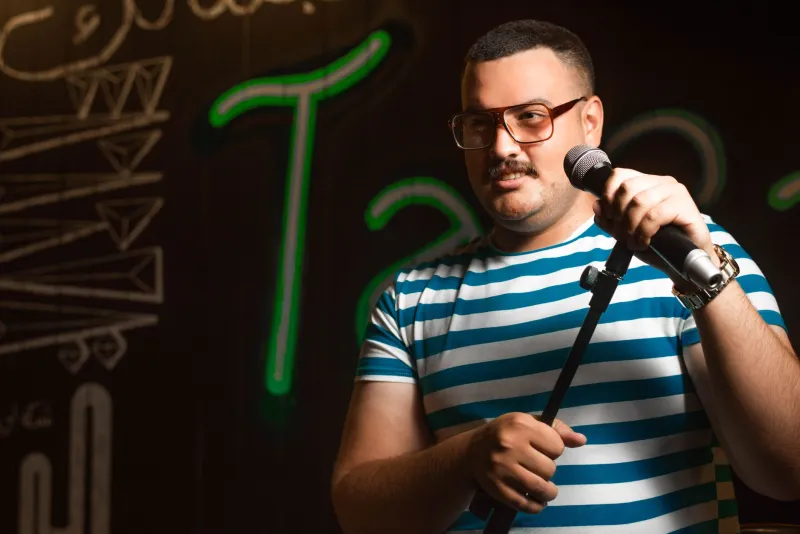
The stand-up circuit has become an increasingly fertile ground for this kind of material. Comics have always gravitated towards taboo subjects — it's where the interesting stuff lives — and horror's core themes of death, bodily horror, and existential dread are essentially a gift.
What's changed recently is the level of craft being applied. It's not enough to just reference horror films for cheap recognition laughs from genre fans. The comedians doing the most interesting work are using horror's structural logic — the build, the reveal, the subverted expectation — as actual comedic tools. The jump scare becomes a punchline delivery mechanism. The slow creeping dread becomes the setup for something that pays off in entirely the wrong direction.
Some of the more adventurous acts on the British circuit have built entire hour-long shows around horror conceits. The ghost story format, in particular, has proven irresistible. There's something about sitting in the dark with a performer who's controlling the atmosphere, building tension, and then puncturing it with something absurd that feels genuinely exciting as a live experience.
Streaming and the New Opportunities
Netflix, Shudder, and the BBC's various streaming arms have given British horror-comedy a platform that the format previously lacked. Shudder in particular has shown real appetite for content that lives in the genre overlap, and British creators have been quick to take advantage.
The streaming format suits horror-comedy well. Audiences can watch alone, which heightens the horror elements, or with friends, which amplifies the comedy. The pause-and-discuss culture that streaming encourages also plays nicely into content that rewards close attention — the background detail that's either funny or terrifying depending on how you read it, the throwaway line that recontextualises everything you've just watched.
Sketch formats have found new life here too. The anthology approach — short, self-contained pieces that can each take a different tonal swing — allows horror-comedy to show its range without demanding that a single piece sustain an impossible balancing act for ninety minutes. You can go full body-horror grotesque in one sketch and then deliver something that's genuinely unsettling in the next, and the format holds it all together.
Why British Humour Fits the Horror Mould
There's a genuine question worth asking here: why does this work so much better in a British context than it does elsewhere? American horror-comedy certainly exists, but it tends to resolve the tension between its two modes more cleanly. The comedy takes over, or the horror does. The uncomfortable middle ground gets smoothed out.
British humour has always been more comfortable leaving things unresolved. The joke that makes you feel slightly worse about yourself. The punchline that doesn't quite let you off the hook. The laugh that turns into something else in the moment after it happens. That's the same emotional territory that effective horror occupies, and the overlap is more than coincidental.
There's also something to be said for British horror's own tradition of class anxiety, institutional dread, and the sense that the most frightening things are often entirely mundane. A monster in the woods is scary. A passive-aggressive neighbour who might be something worse is terrifying in a way that's also sort of funny. That's a distinctly British flavour of horror, and comedy is already fluent in it.
The Audience Is Keeping Up
Perhaps the most encouraging sign is that audiences aren't just tolerating this genre fusion — they're actively seeking it out. Horror fans have always had a complicated relationship with comedy. For years, horror-comedy was treated with suspicion in genre circles, as if the laughs somehow diluted the scares or signalled that a film or show wasn't taking itself seriously enough.
That snobbery has largely dissolved. Horror audiences now seem to understand intuitively that the comedy and the horror can amplify each other rather than cancel each other out. The laugh that releases tension makes the subsequent scare hit harder. The horror that gives the comedy stakes makes the jokes land with more weight. It's a feedback loop, and once you've experienced it working properly, straightforward horror can start to feel like it's missing something.
Comedy audiences have made a similar journey in the other direction. There's a growing appetite for material that doesn't just make you laugh but leaves you with something to chew on — an image, an idea, a feeling that lingers past the final punchline. Horror delivers that almost by definition.
What Comes Next
The British horror-comedy scene feels like it's still in an expansive phase rather than a consolidating one. There's room for more voices, more formats, and more experiments with where exactly the line sits between funny and frightening — and how much more interesting it is when you refuse to draw that line at all.
If the tradition holds, the best stuff is probably still ahead. Britain has been making people laugh at terrible things for as long as it's been making them scared of the dark. Putting those two impulses in the same room and seeing what happens feels less like a novelty and more like a homecoming.