Gathering of the Ghouls: Why Britain's Horror Conventions Are the Scene's Most Vital Secret
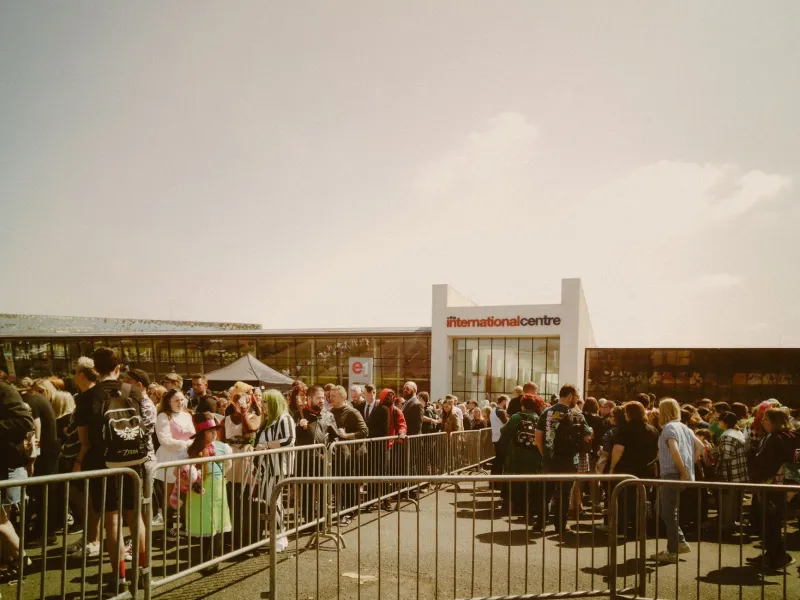
There's a moment that happens at almost every British horror convention, usually somewhere between the panel on practical effects and the midnight screening of something deeply unsuitable. A first-time attendee — possibly dragged along by a more enthusiastic friend — looks around the room, takes in the costumes, the laughter, the heated debates about whether a particular 1970s Hammer film holds up, and you can see it click into place for them. This is a community. A proper one.
The UK horror convention circuit has been growing steadily for years, but it still flies remarkably under the radar — even within the genre itself. While American events like Monsterpalooza and Screamfest dominate the international conversation, Britain has quietly built its own thriving ecosystem of gatherings, from intimate one-day affairs in provincial theatres to multi-day spectacles filling out major city venues. And increasingly, the people running them — and the people attending — will tell you these events matter for reasons that go well beyond nostalgia and celebrity selfies.
More Than a Fan Meet-Up
Ask anyone who organises a British horror convention what they're actually running, and very few will describe it purely as a fan event. Sarah Holbrook, who has been co-organising a regional horror gathering in the Midlands for the past six years, puts it plainly: "We started it because we wanted somewhere to talk about the films we loved. But within about two years, it had become something else entirely — a place where short film directors could show their work, where makeup artists were getting hired, where authors were finding publishers."
That shift — from fan celebration to working industry space — is something you hear echoed across the circuit. The conventions that have thrived aren't the ones trading purely on nostalgia, though there's nothing wrong with getting a signed photo from a beloved scream queen. The ones drawing the biggest crowds and the most sustained interest are those that have positioned themselves as genuine meeting grounds between the people who love horror and the people who make it.
For independent British filmmakers in particular, this has become something close to essential. Distribution remains brutally difficult for low-budget genre work. Streaming platforms are increasingly cautious about what they pick up. Film festivals can feel remote and gatekept. A horror convention, by contrast, puts a creator directly in front of the exact audience their work is made for — and often in the same room as producers, distributors, and collaborators who are actively looking for the next project.
The Talent Pipeline Nobody's Talking About
One of the less-discussed functions of the UK convention circuit is the role it plays in identifying and nurturing emerging talent. Prosthetics and creature effects artists, in particular, have found conventions to be transformative. Live makeup demonstrations pull significant crowds, and the feedback — immediate, passionate, occasionally very blunt — is the kind that no online portfolio can replicate.
Dan Prescott, a practical effects artist from Sheffield who has worked on several British independent productions, credits a convention appearance with changing the trajectory of his career. "I did a live demon transformation at an event in Manchester and someone in the audience turned out to be producing a feature. We had a conversation afterwards, and eighteen months later I was doing the makeup for their film. That's not something that happens on Instagram."
This kind of serendipitous connection is part of what makes the physical gathering so stubbornly relevant in an era when, theoretically, everything can be done online. Horror fans are voracious digital consumers — forums, YouTube channels, podcasts, social media accounts dedicated to increasingly niche subgenres — but there's a growing sense among frequent convention-goers that the internet, for all its reach, has actually made the in-person event more valuable, not less.
Why Fans Are Choosing the Queue Over the Feed
"You can watch a thousand hours of horror content online and still feel completely alone in it," says Marcus Webb, who travels from Bristol to attend at least three conventions a year. "When you're in a room with a thousand other people who all gasped at the same moment in a film, or who all know exactly which scene you mean when you bring up a specific bit of practical gore from a 1983 British TV movie — that's different. That can't be streamed."
The communal experience of horror has always been part of its power. The shared jolt of a jump scare, the collective unease of a slow-burn dread — these land differently in a crowd. British horror conventions have tapped into that instinct and built programming around it: communal screenings of films that feel genuinely different watched together, live readings from horror authors, Q&As that run well over time because nobody wants to stop talking.
For younger fans especially, conventions have become a point of entry into a broader cultural conversation about what British horror is and where it's going. The genre's current moment — critically re-evaluated, commercially resurgent, increasingly diverse in its voices and preoccupations — is being actively debated at these events in ways that feel more immediate than any think-piece.
The Organisers Holding It Together
None of this happens without an enormous amount of unglamorous work. The people running Britain's horror conventions are, almost without exception, doing it out of genuine love for the genre rather than financial calculation. Margins are thin, logistics are nightmarish, and the gap between a successful event and a costly disaster can come down to a single guest cancellation or a venue problem on the day.
What keeps them going, most organisers say, is the room itself. The moment the doors open and the people who've travelled from across the country — sometimes from across the world — start filling the space. The conversations that spill out of panel rooms and into corridors and carry on long after the last screening has finished.
British horror has always been good at community, even when it didn't have the infrastructure to support it. The conventions are, in many ways, just the latest expression of something that was already there: a shared conviction that the dark stuff matters, that it deserves serious attention and serious celebration, and that the people who make it and love it are better off in the same room.
If you haven't been to one yet, it might be time to find out what you've been missing.