Brains Over Brawn: How British Horror's New Heroines Are Winning by Thinking, Not Running
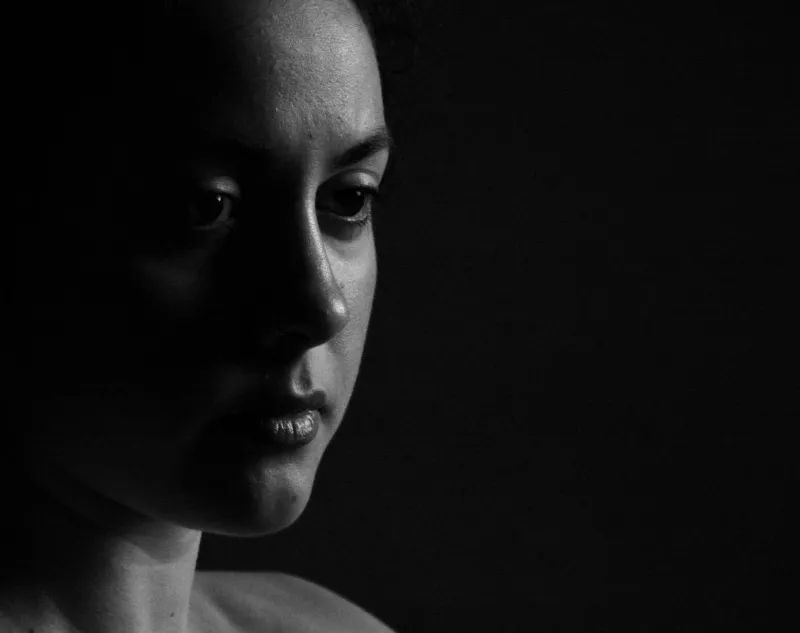
There's a moment in almost every classic horror film where the heroine runs. She trips, she scrambles, she narrowly escapes. It's a sequence so familiar it's practically a genre convention in its own right — the breathless sprint, the near miss, the physical ordeal as proof of survival. But spend any time with recent British horror output, and you'll notice something quietly radical happening. The women at the heart of these stories aren't running half as much as they used to. They're thinking.
This isn't a minor stylistic tweak. It represents a genuine philosophical shift in how UK filmmakers and showrunners are constructing female protagonists — and what they believe those characters should represent.
The Problem with Running
The 'final girl' template, popularised by American slasher cinema in the late seventies and eighties, wasn't entirely without its merits. Carol Clover's influential academic work on the archetype acknowledged the ways in which these characters could be read as proto-feminist figures — survivors in a landscape designed to destroy them. But the model had a ceiling. Physical endurance and moral purity were the twin pillars of survival, and both carried uncomfortable implications about which kinds of women deserved to make it to the credits.
British horror has always had a slightly different relationship with that template. Hammer's leading ladies were often more complex than their American counterparts, caught up in Gothic psychological drama as much as outright physical peril. But even here, agency was frequently limited. Women reacted. Men acted. The genre calcified around that dynamic for decades.
What's changed recently is the willingness — in British productions specifically — to hand women not just the starring role but the strategic advantage.
Cunning as a Survival Mechanism
Consider the shape of recent UK horror narratives where female characters take centre stage. The antagonist — whether human predator, supernatural entity, or something more ambiguous — is rarely defeated through brute force. Instead, the resolution hinges on the protagonist having understood something the threat didn't realise she'd worked out. She's been mapping the situation, gathering information, managing perceptions. By the time the confrontation arrives, she's been fighting for quite some time. The audience just didn't clock it.
This approach requires writers to do considerably more work. A chase sequence communicates danger through pace and editing. Psychological strategy demands that viewers understand the internal logic of a character's choices, often without those choices being made explicit. It's a harder sell — and arguably a more rewarding one.
British television has been particularly fertile ground for this evolution. The intimacy of the small screen, with its longer character development arcs and its tradition of psychological drama, suits this kind of storytelling well. A protagonist who spends three episodes quietly accumulating leverage over a threat lands with far more impact than one who simply outlasts it.
Manipulation as Moral Complexity
One of the more interesting consequences of this shift is that it complicates the moral landscape considerably. A heroine who outsmarts her antagonist through deception, misdirection, or psychological manipulation isn't straightforwardly heroic in the traditional sense. She might lie. She might use people. She might make decisions that are genuinely difficult to endorse.
This moral ambiguity is, frankly, far more interesting than the alternative. When survival requires virtue, female characters are constrained by the need to remain sympathetic in conventional terms. When survival requires intelligence — and intelligence that might shade into ruthlessness — the character becomes genuinely three-dimensional. She has agency, but that agency has weight.
British horror has always had a taste for moral complexity. From the Gothic tradition's fascination with transgression to the kitchen-sink social realism that inflects so much contemporary UK genre work, there's a cultural appetite here for stories that refuse easy comfort. Heroines who win through cunning fit neatly into that tradition.
The Supernatural Problem
One challenge worth acknowledging is how this model interacts with supernatural threats. You can outmanoeuvre a human antagonist through psychological insight because human antagonists, however dangerous, are comprehensible. They have motivations, blind spots, and exploitable needs. An entity that operates outside human logic presents a different problem.
What's clever about the best recent British horror in this space is the way it reframes supernatural threats as puzzles rather than pure forces of destruction. The protagonist's intelligence becomes a research tool — she's decoding the rules of the threat, finding the internal logic of something that appears to have none. This transforms the survival story into something closer to a mystery, with the heroine as detective rather than prey.
It also, usefully, sidesteps the question of physical capability entirely. You don't need to be able to outrun a ghost. You need to understand it.
What This Means for British Horror's Identity
There's something distinctly British about the specific flavour of this intelligence-led heroine. Where American horror has historically celebrated the will to survive as an almost physical force — the bloodied, battered protagonist who simply refuses to stop — British genre storytelling tends to be more interested in the interior life. Endurance through sheer psychological acuity, the ability to stay composed and keep thinking when everything around you is designed to make you panic: these feel like qualities that resonate with a particular strand of British cultural self-image.
That's not to say there's anything wrong with the physical survivor. But the intelligence-led heroine opens up a different kind of story — one where the most terrifying thing about the protagonist isn't her toughness, but how well she understands the situation she's in, and how much further ahead she's been thinking than anyone realised.
The Audience Shift
It's worth noting that this evolution hasn't happened in a vacuum. British horror audiences — increasingly vocal and analytically engaged, as anyone who's spent time in the genre's online communities will know — have been calling for more complex female characterisation for years. The appetite was there before the supply caught up.
What's particularly encouraging is that the intelligence-led heroine doesn't require a reduced threat level to function. These aren't stories where the danger has been softened to give the protagonist an easier time. If anything, the antagonists in these narratives tend to be more genuinely threatening — more calculating, more patient — precisely because the story needs a worthy opponent for a protagonist who wins with her head.
British horror has always been at its best when it's doing something slightly different from everyone else. The quiet, determined woman who's been three moves ahead the entire time feels like a distinctly homegrown contribution to the genre's ongoing evolution — and one that's only going to get more interesting from here.