Prophets Without Honour: Why Britain's Best Horror Writers Can't Crack America
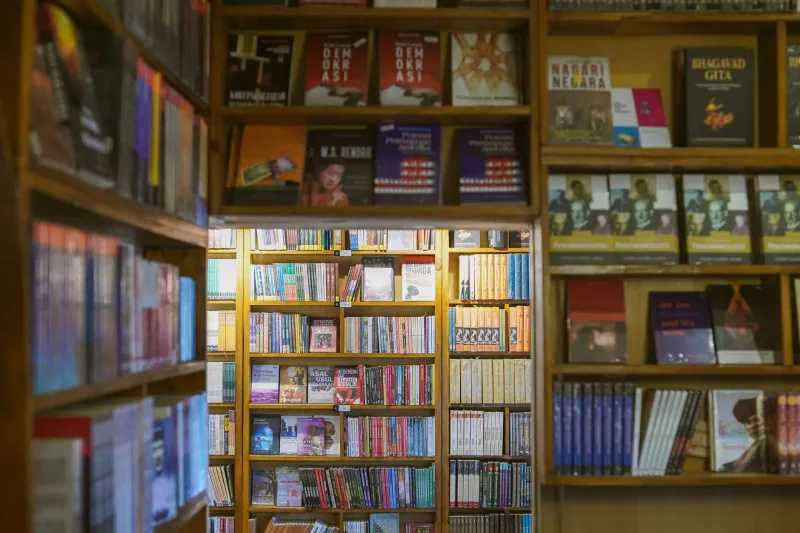
Walk into any Waterstones on a Friday afternoon and you'll see it immediately. The horror shelves groan under the weight of Stephen King, Paul Tremblay, Grady Hendrix, and a dozen other American names whose spines you'd recognise from twenty paces. Tucked somewhere in the mix, if you know where to look, you might find a handful of British authors. Might. It's a disparity that's been quietly gnawing at the UK horror community for years, and the more you dig into it, the more uncomfortable the picture becomes.
British horror writing is not, by any measure, lacking in quality or ambition. The tradition runs deep — from Shelley and Stoker through to Ramsey Campbell, who many consider the greatest living horror writer in the English language. Yet Campbell himself has spoken candidly about the challenges of penetrating the American market in any sustained, commercially meaningful way. If the godfather of British horror can't consistently land on the other side of the Atlantic, what hope does a debut novelist from Wolverhampton have?
The Gatekeeping Nobody Talks About
The publishing industry has a geography problem, and it's one that rarely gets discussed openly. The majority of the world's largest publishing houses are headquartered in New York, and even the London arms of those same conglomerates often operate with a significant degree of deference to their American counterparts when it comes to acquisitions and marketing spend.
"There's a very real sense that American editors have the final say on what gets a serious push," says one UK literary agent who asked not to be named. "A British horror novel might be acquired enthusiastically in London, but if New York isn't convinced it has crossover appeal, the US marketing budget simply doesn't materialise. And without that, you're not getting into the chain stores, you're not getting the review coverage, you're essentially invisible."
The phrase 'crossover appeal' comes up repeatedly in these conversations, and it's worth unpacking what it actually means in practice. For British horror specifically, it often translates to a fairly blunt question: does this feel sufficiently universal, or does it feel too specifically British? The irony is that American horror — with its small-town New England settings, its particular brand of suburban anxiety, its deeply localised cultural references — is rarely subjected to the same test when it arrives on British shores. We simply absorb it, contextualise it, and buy it in enormous quantities.
Lost in the Atlantic
Author Sarah Lotz, who writes horror and dark fiction with a distinctly British sensibility, has described the experience of navigating transatlantic publishing as "trying to shout across a very loud room where everyone's already listening to someone else." The structural advantages American authors enjoy aren't accidental — they're the product of decades of investment, infrastructure, and cultural export machinery that British publishing simply hasn't replicated.
There's also an argument about the nature of British horror itself. Much of what makes contemporary UK horror compelling — the class anxiety that runs through writers like Adam Nevill, the post-industrial gothic of certain northern voices, the very particular dread that seems to seep out of the British countryside — is rooted in experiences and textures that American readers may find harder to immediately access. That's not a failing of the work. It's actually a mark of its authenticity. But authenticity doesn't always translate to commercial accessibility, and commercial accessibility is what American publishers are ultimately buying.
"I think there's a tendency to pathologise British horror as 'niche' when it deals with specifically British anxieties," says one horror novelist based in the north of England. "But nobody tells American writers their work is too American. King's Maine, Straub's New York — these are intensely local visions. The difference is that the American publishing machine decided decades ago that local American equals universal. We've never been afforded that same assumption."
The Streaming Effect and What It Hasn't Fixed
You might reasonably expect that the explosion of global streaming platforms would have levelled things out somewhat. British horror television and film have found genuinely international audiences in recent years, which in theory should create a halo effect for the literature. In practice, the link between screen success and book sales is more tenuous than publishers would like.
When a British horror property succeeds on screen, the rights are frequently acquired by American studios or streamers, the marketing is controlled from Los Angeles, and the associated book deals — if there are any — tend to benefit American-style packaging and presentation. The British author whose work inspired the thing in the first place may find themselves watching the wave from the shore.
There are exceptions, of course. A handful of British horror writers have managed to build genuine transatlantic profiles, often through a combination of genre-straddling work that resists easy categorisation, relentless self-promotion, and a degree of luck that nobody in publishing will admit plays as large a role as it does. But exceptions prove rules, and the rule here is discouraging.
What Needs to Change
Agents and editors who care about British horror tend to agree that the solutions, while not simple, are at least identifiable. Greater investment in international rights deals at the acquisition stage. More aggressive pitching of British authors to American independent presses, which are often more adventurous than the major houses. A concerted effort by British publishers to frame UK horror not as a regional curiosity but as a distinct and valuable tradition with global resonance.
There's also a conversation to be had about how British horror authors are positioned domestically. The genre still carries a certain stigma in mainstream literary culture here — a prejudice that American horror has largely shaken off, partly because American publishing decided commercially to take it seriously and the cultural status followed. British literary culture has been slower to extend that same respect, which makes it harder to build the kind of domestic profile that attracts international attention in the first place.
For readers who want to do their bit, the answer is straightforward: buy the books. Seek out the Adam Nevills, the Alison Littlewoods, the Gary McMahons. Leave the reviews. Recommend them to American friends. The international publishing machine responds to signals, and British horror readers have more power to generate those signals than they perhaps realise.
The tradition is too good, and the writers currently working within it too talented, to remain prophets without honour in their own time.