Rescued from the Dark: The Race to Restore Britain's Classic Horror Films Before It's Too Late
There's a particular kind of horror that has nothing to do with monsters or haunted houses. It's the quiet, creeping dread of knowing that something irreplaceable is disappearing — frame by frame, reel by reel — and that nobody outside a small circle of specialists is paying much attention. Britain has produced some of the most distinctive, influential horror cinema in the world, and yet a significant portion of it exists in states ranging from 'worryingly degraded' to 'actively disintegrating.' The race to restore and preserve these films isn't just a technical exercise. It's a cultural emergency.
What Gets Lost When a Print Dies
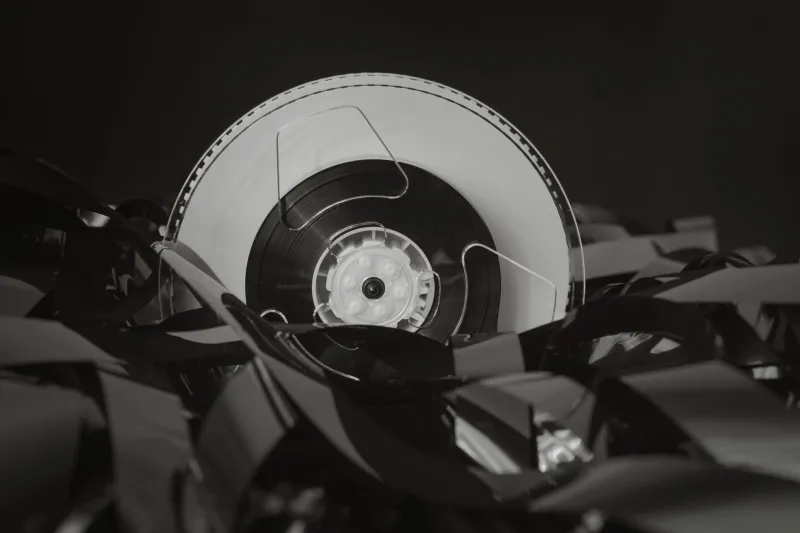
Most people assume that because a film exists — because they can vaguely remember watching it on late-night telly or finding a battered VHS at a car boot sale — it must be safely archived somewhere. The reality is considerably grimmer. Nitrate film stock, used extensively through the early decades of cinema, is notoriously unstable. It deteriorates, it warps, and in the wrong conditions it becomes genuinely flammable. Acetate stock, which replaced nitrate from the 1950s onward, brought its own catastrophe in the form of 'vinegar syndrome' — a chemical breakdown that causes the film to shrink, buckle, and emit an unmistakable sharp smell as it essentially digests itself.
For British horror specifically, the problem is compounded by decades of institutional indifference. Studios that once held extensive libraries went through mergers, buyouts, and closures. Print ownership became tangled and disputed. Films that didn't turn an obvious profit were quietly deprioritised, left in inadequately climate-controlled storage, or simply lost track of entirely. The BFI National Archive holds an extraordinary collection, but even they will tell you candidly that gaps exist — sometimes significant ones.
The Restoration Process: More Art Than Science
For those films that do survive in some form, bringing them back to life is a painstaking, expensive, and occasionally maddening undertaking. Digital restoration has transformed what's possible over the past two decades, but it hasn't made the work easy.
The process typically begins with locating the best surviving element — ideally an original camera negative, though more often a print struck from one. That element is then scanned at extremely high resolution, sometimes 4K or beyond, capturing every scratch, splice, and speck of dust along with the original image. From there, restoration technicians work through the footage almost shot by shot, using specialist software to remove damage while being scrupulously careful not to alter what was actually there to begin with.
That last part is where things get philosophically interesting. Restoration is never purely objective. Every decision about what constitutes 'damage' to be removed versus 'authentic texture' to be preserved involves a degree of interpretation. A grain structure that one technician considers intrinsic to the film's period atmosphere, another might flag as noise to be cleaned up. The best restoration teams include film historians and genre specialists precisely to navigate these calls — people who understand not just the technical parameters but what the film was trying to do in the first place.
Colour presents its own set of challenges. Faded dye layers, inconsistent processing, and the simple passage of time mean that the colour palette of a restored film often has to be painstakingly reconstructed using reference materials — production stills, costume and set documentation, sometimes interviews with surviving crew members who remember what things actually looked like on the day.
British Horror's Particular Stakes
For horror as a genre, restoration carries a weight that goes beyond mere archival tidiness. The visual grammar of classic British horror — the saturated Eastmancolour of Hammer's gothic period, the grainy, handheld immediacy of 1970s folk horror, the lurid expressionism of Amicus anthology films — is inseparable from the effect these films have on an audience. Watching a properly restored print of something like The Wicker Man or Witchfinder General isn't just a cleaner viewing experience. It's closer to what audiences actually saw when these films first screened, and that matters enormously for understanding why they landed the way they did.
Restoration projects have also, in several notable cases, recovered footage that was cut for censorship reasons and never reinstated, or that simply went missing between the original negative and the prints that circulated. The history of British horror is littered with films that exist in multiple, sometimes contradictory versions — different cuts for different markets, scenes removed by the BBFC, alternative endings shot for specific distributors. Restoration work frequently involves reconstructing a more complete version of a film than any single surviving element can provide.
Bringing New Eyes to Old Nightmares
Perhaps the most exciting consequence of the current wave of restoration activity is what it means for audiences who've never encountered these films in anything approaching their original form. Streaming platforms and boutique physical media labels — Arrow Video being the most prominent UK example — have transformed the accessibility of restored classic horror. A generation of viewers who grew up with high-definition as a baseline expectation can now encounter films from the 1960s and 70s in presentations that don't ask them to squint through degradation and damage to find the artistry underneath.
The commercial results have, in many cases, been genuinely surprising to the industry. Restored releases of British horror titles have repeatedly outperformed expectations, suggesting an appetite that distributors had chronically underestimated. Horror fans, it turns out, care deeply about image quality — and they care even more deeply about films being presented with the seriousness and contextual richness they deserve. Restoration releases packaged with scholarly essays, audio commentaries, and supplementary materials have found audiences not just among established genre devotees but among younger viewers encountering these films for the first time.
The Funding Gap and the Urgent Timeline
None of this comes cheap, and that's where the picture darkens again. Proper restoration is extraordinarily resource-intensive, and the window for saving some of the most at-risk materials is genuinely closing. Institutions like the BFI do extraordinary work with the funding available to them, and the government's support for the National Lottery-funded preservation programmes has been meaningful. But the scale of what still needs doing — across not just horror but British cinema more broadly — dwarfs current capacity.
For horror specifically, there's an additional complication: the genre has historically struggled to be taken seriously by the cultural bodies that make funding decisions. Films that were dismissed as exploitation product when they were made sometimes find themselves deprioritised again decades later when preservation budgets are allocated. The argument that a Hammer Dracula or a Pete Walker shocker represents a legitimate and significant piece of British cultural heritage is one that archivists and horror historians continue to have to make, repeatedly, to people who should probably know better by now.
Why This Matters Beyond Nostalgia
It would be easy to frame all of this as a project driven by nostalgia — by fans wanting to see their favourite old films looking nice. But that undersells what's actually at stake. Classic British horror is a living influence on contemporary filmmaking, on genre fiction, on how British culture processes its own anxieties about class, landscape, sexuality, and mortality. Filmmakers working today cite these films. Writers reference them. Artists respond to them. If the originals degrade beyond recovery, we lose not just historical artefacts but the primary sources that feed an ongoing creative conversation.
Restoring these films is, in the most literal sense, keeping that conversation alive. And given what British horror has contributed to global cinema — given the reach, the influence, the sheer imaginative audacity of what was produced in those decades — it seems like the least we can do.