Wicked Women: How British Horror TV Transformed the Female Villain from Caricature to Cultural Mirror
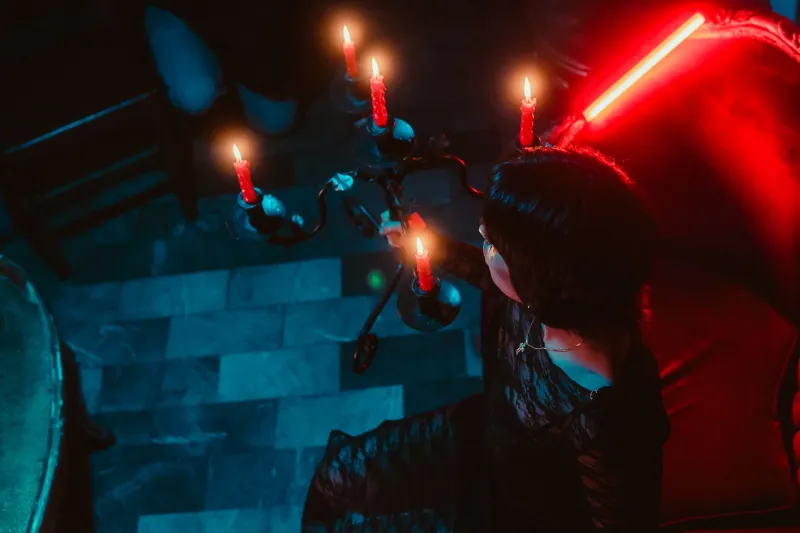
There's something about a woman doing terrible things that British television has never quite been able to look away from. Long before prestige drama made the morally compromised female protagonist fashionable, horror TV was already obsessed with her — dressing her in black velvet, giving her a cruel smile, and letting her loose on an unsuspecting audience. But the way those women have been written, framed, and ultimately punished (or not) tells us an enormous amount about the era that created them.
Pull up a chair. This one gets dark.
The Gothic Temptress and Her One Job
Cast your mind back to British television in the 1960s and 70s. Horror anthology series were everywhere — Armchair Thriller, Dead of Night, Mystery and Imagination — and female villains tended to follow a very specific template. She was beautiful, she was dangerous, and her evil was almost always rooted in sexuality. The vampire woman. The vengeful widow. The witch who lured men to their doom.
These weren't characters so much as warnings. The message, barely concealed beneath the period costumes and dramatic organ stabs, was straightforward: female desire equals destruction. She existed to be feared and, crucially, to be defeated. Her wickedness was rarely given a backstory or a motivation beyond some vague, supernatural malevolence. She simply was evil, and the men around her suffered for it.
There's a certain camp pleasure to revisiting these portrayals now — the raised eyebrows, the theatrical line readings, the sheer commitment to villainy — but it's worth sitting with the discomfort too. These were the templates a generation of viewers absorbed as normal.
The 1980s Shift: Cracks in the Archetype
Something started to shift in the 1980s. British horror television, influenced partly by the feminist conversations happening in wider culture and partly by a genuine desire to tell more complicated stories, began producing female antagonists who were harder to categorise.
The era's social anxieties — Thatcherism, the erosion of traditional community structures, a deep national unease about who held power and who didn't — started bleeding into horror narratives. Female villains began acquiring motivations. Grievances. History. They were still frightening, but now there was often a reason to be frightened that went beyond simple supernatural malice.
This wasn't a clean or consistent evolution. Plenty of 80s horror TV still reached for the same tired seductress archetype. But the cracks were there, and through them something more interesting was beginning to grow.
The 1990s and the Horror of the Ordinary
If the 80s introduced complexity, the 1990s made female horror genuinely unsettling in a new way: by making it mundane. The most terrifying women in British horror TV during this period weren't supernatural creatures. They were neighbours. Mothers. Colleagues. Women whose evil was entirely human in scale and therefore, somehow, much harder to dismiss once the credits rolled.
Series like The Woman in Black adaptations and various BBC anthology specials began positioning female characters not as supernatural Other but as products of recognisable social pressures — grief, isolation, powerlessness — that had curdled into something dangerous. The horror wasn't that these women were monsters. It was that you could understand exactly how they got there.
Contemporary Television: The Monster Gets Her Story
The last decade or so has produced what might be the most genuinely radical reimagining of the malevolent woman in British horror TV's history. The shift isn't just that female antagonists are better written now — though they often are — it's that the narrative gaze has fundamentally changed.
Contemporary British horror series have increasingly placed the audience inside the female villain's perspective. We aren't watching her evil from a safe distance. We're inhabiting it, understanding it, occasionally even rooting for it. Series like The Haunting of various BBC productions and Channel 4's forays into psychological horror have given us women whose capacity for cruelty is inseparable from their capacity for love, grief, and survival.
There's also been a notable willingness to let these characters remain unresolved. The tidy moral punishment that closed out the gothic temptress narratives of earlier decades — the villain destroyed, order restored — feels increasingly absent. Contemporary British horror TV seems far more comfortable letting its wicked women walk away, or worse, letting the audience sit with the uncomfortable realisation that they weren't entirely wrong.
What Are We Actually Afraid Of?
Here's the question worth asking: what does the evolution of female evil in British horror TV actually tell us about British culture?
The early archetypes reflected anxieties about female sexuality and independence at a time when both were culturally contested. The 80s villains embodied fears about social upheaval and the dismantling of established hierarchies. The 90s ordinary monsters spoke to a creeping suspicion that the real dangers were domestic, invisible, hiding in plain sight.
And the contemporary versions? They seem to reflect something more uncomfortable still — an acknowledgement that the systems which create damaged, dangerous women are worth examining. That the question "why did she do it?" deserves a serious answer. That sometimes the monster has a point.
This doesn't make the characters less frightening. If anything, it makes them more so.
The Performances That Made It Real
None of this would matter without the actors who brought these characters to life. British television has an extraordinary tradition of performers who understood exactly what they were working with — who could hold the camp and the genuine menace simultaneously, or who could deliver a performance so internally coherent that the character's evil felt inevitable rather than imposed.
From the theatrical grandeur of earlier anthology performers to the coiled, contemporary stillness of actresses working in modern psychological horror, the women playing these roles have consistently done something remarkable: they've made the audience feel something complicated. Not just scared. Implicated.
Where Next?
British horror television shows no sign of losing its fascination with the wicked woman — but the conversation is clearly evolving. The most interesting question for the next decade might not be "how do we make female villains more complex?" but rather "who gets to tell these stories, and from where?"
As more women move into writing and directing roles in British horror TV production, the archetypes are being interrogated from the inside rather than just updated from without. What emerges from that process will be worth watching very closely indeed.
Just, you know, maybe not alone. And not with the lights off.