Something Wicked in the Wilderness: Why Britain's Landscape Is Horror's Greatest Villain
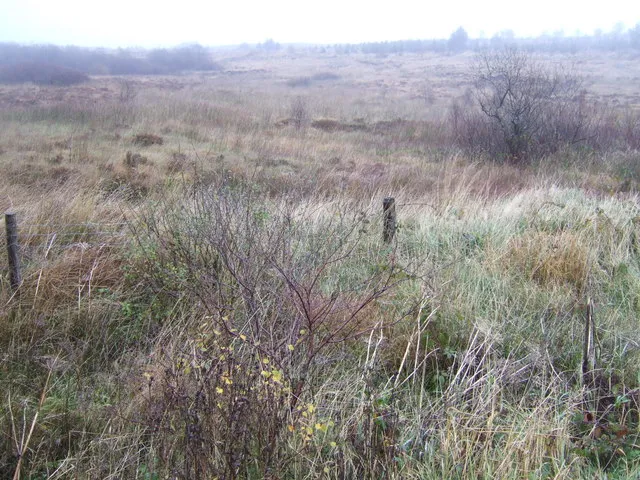
Photo: Jonathan Billinger, CC BY-SA 2.0, via Wikimedia Commons
There's a moment in almost every great piece of British rural horror where the landscape itself seems to turn against you. The mist closes in a little too quickly. The treeline feels a touch too dense. The village green, all charming and postcard-perfect, carries an undertone you can't quite name. And that's the genius of it, really — Britain's countryside doesn't need a monster. Half the time, it is the monster.
We've spent decades exporting gothic terror to the rest of the world, and while Hammer's foggy London streets and crumbling Transylvanian castles get plenty of the credit, it's the quieter, more intimate geography of the British Isles that tends to burrow deepest under the skin. There's something about a half-empty moorland village or a peat-black Scottish loch that triggers a primal unease — and the horror genre has known how to exploit that for a very long time.
The Moors, the Fens, and the Feeling That Something's Watching
Let's start with the obvious: the moors. Whether it's Dartmoor, the North Yorkshire stretch, or the bleaker expanses of Bodmin, the British moorland has an almost mythological relationship with dread. Conan Doyle understood it. The Hound of the Baskervilles isn't really about a supernatural dog — it's about the way a landscape can feel actively malevolent, like the ground itself resents your presence.
Modern horror filmmakers have leaned into this hard. The 2018 folk horror film Apostle made the Welsh countryside feel like a living, breathing entity with its own dark agenda. More recently, productions like The Ritual used the ancient Swedish forest as a stand-in for a kind of primordial British wilderness — the film resonated so strongly with UK audiences precisely because those dense, lightless trees felt familiar. We've all had that walk in the woods where the path felt slightly wrong.
The fens of East Anglia deserve their own chapter. Flat, waterlogged, and historically associated with isolation and inbreeding in the popular imagination, the fenlands have been criminally underused in horror. When they do appear — in works like Darkness, Darkness or various MR James adaptations — the effect is extraordinary. There's nowhere to hide in a flat landscape. You can see everything coming, and that somehow makes it worse.
The Village That Doesn't Want You to Leave
If the moors represent horror through emptiness, the isolated British village represents something more socially complex. The idea that a seemingly welcoming community might harbour something rotten beneath the bunting and the cricket fixtures is a distinctly British anxiety — and it speaks to a real cultural tension between the romanticised rural idyll and the reality of insular, occasionally hostile rural communities.
The Wicker Man obviously looms large here, but it's worth noting how many smaller, less celebrated productions have mined the same seam. The 2019 BBC adaptation of A Discovery of Witches understood that the Oxfordshire village setting wasn't just backdrop — it was active menace dressed up as charm. Similarly, Channel 4's Midsommar-adjacent productions and various British indie films have used the aesthetic of the chocolate-box village to maximum unsettling effect.
The psychology here is interesting. Research into environmental psychology suggests that humans are hardwired to find certain landscape features threatening — enclosed spaces with limited exit routes, unfamiliar social structures, darkness and silence. The isolated British village hits nearly every one of those triggers while simultaneously presenting itself as safe and familiar. That cognitive dissonance is where horror lives.
Scotland's Particular Brand of Beautiful Terror
If England does creepy villages and ominous moors, Scotland has cornered the market on a different kind of dread entirely — one built on scale, silence, and the sense that the landscape simply doesn't care whether you survive.
The Scottish Highlands are so vast and so indifferent that they produce a kind of existential horror that's harder to pin down but no less effective. Films like Under the Skin weaponised the A9 corridor and the grey, rain-hammered emptiness of rural Aberdeenshire to create something genuinely alien. Scarlett Johansson's predatory alien felt plausible in that landscape because the landscape itself already felt like it belonged to something other than us.
The islands are even more potent. Orkney, Shetland, the Outer Hebrides — these are places where the modern world feels genuinely thin, where ancient history presses up close against the present, and where the weather can turn a pleasant afternoon into a survival situation in the time it takes to walk to the next village. Shetland as a crime drama understands this instinctively. Horror filmmakers are only just beginning to catch up.
Why We Keep Going Back
There's a telling irony in the fact that British horror audiences who live in cities — which is most of us — find rural settings so reliably terrifying, while simultaneously romanticising the countryside in every other cultural context. We want the cottage in the Cotswolds for the weekend. We absolutely do not want to be there when something starts scratching at the door.
Part of this is the loss of control that urban life insulates us from. In a city, you're never truly alone, never truly without resources, never more than a few minutes from another human being. The countryside strips all of that away. Your phone signal goes. The nearest A&E is forty minutes down a single-track road. The neighbours, if you have any, are people you've never met.
Streaming platforms have noticed this. Netflix's The Haunting of Bly Manor transplanted its American source material into a very English rural setting precisely because the English countryside carries an atmospheric charge that the American equivalent simply doesn't replicate. BritBox and ITVX have both invested in rural horror productions in recent years, and the audience figures suggest we're hungry for more.
Geography as Storytelling
The best British rural horror understands that landscape is character. It has history, personality, and agency. The moor doesn't just provide atmosphere — it actively participates in the story. The village doesn't just serve as setting — it has motivations.
This is something that takes genuine craft to achieve on screen, and it's something that British filmmakers, working with the real locations rather than backlot approximations, tend to do better than anyone. When you watch a production filmed on actual Dartmoor in November, you're watching a cast and crew who were genuinely cold, genuinely isolated, genuinely a bit rattled by the silence. That authenticity transfers.
Britain's landscape is old in a way that feels meaningful. The stones are older than our history. The paths were worn by people whose names we'll never know, walking to places that no longer exist. There's something in that depth of time that resists easy comfort — and horror, at its best, knows exactly how to use it.