No More Screaming on Cue: How British Horror's Leading Women Are Rewriting Their Own Rules
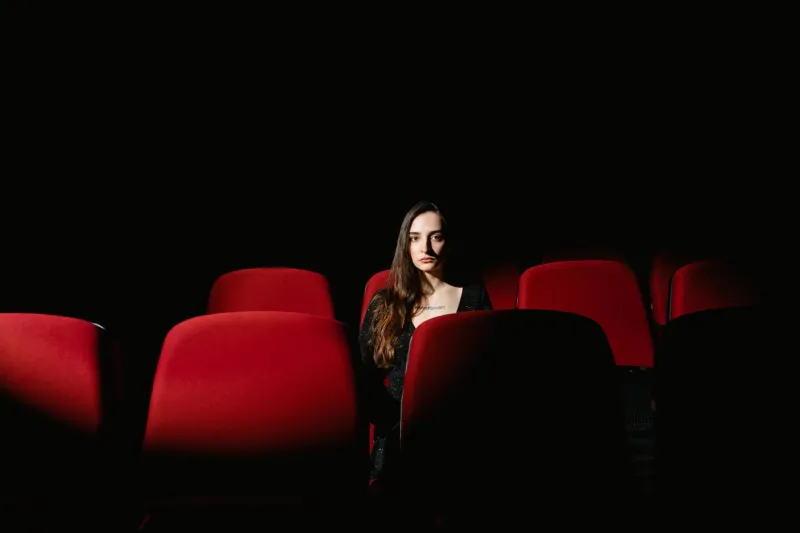
There's a particular kind of audition story that circulates among British actresses who've spent any time in the horror world. You go in for a role, you're handed a breakdown that describes your character as 'terrified but beautiful', and somewhere between the casting couch and the callback, you realise that's the entire brief. Terrified. But beautiful. That's it. That's the job.
For a long time, that was simply accepted as the cost of entry into genre filmmaking. British horror has a magnificent history, but it's also one riddled with women who were asked to do little more than look frightened in a nightgown. The good news — and there genuinely is good news here — is that something has shifted, and it's shifted fast.
The Weight of the Archetype
To understand where things are going, it helps to be honest about where they've been. The classic British horror actress existed in a narrow band of possibility. She was either the virginal victim, the wanton temptress who got punished for it, or the plucky heroine who survived by being somehow less threatening than her peers. Hammer Films perfected this taxonomy. The women were gorgeous, frequently underdressed, and almost entirely defined by their relationship to whatever monster or madman was doing the heavy lifting narratively.
None of this is a secret. What's less often acknowledged is how long that template persisted well beyond Hammer's golden era. Even into the 1990s and 2000s, British horror — particularly at the lower-budget end where most of it actually gets made — was still defaulting to those same tired configurations. The genre had evolved in a dozen other ways while leaving its female characters largely stranded.
The actresses who pushed back often paid for it. Roles dried up. They were considered difficult. The industry had a long memory for women who asked too many questions about their characters' motivations.
Something Changed in the Casting Room
So what broke the deadlock? It wasn't any single film or moment, but a confluence of pressures that arrived more or less simultaneously. The conversation around representation in British film and television — accelerated by movements like #MeToo and the broader cultural reckoning with how women are portrayed on screen — reached the horror community with real force around the late 2010s. Suddenly, the question of why the woman in the horror film existed purely to be menaced became not just a feminist talking point but a genuine industry concern.
At the same time, streaming platforms began commissioning British horror content at a rate the industry hadn't seen since the video nasty era, and those platforms were specifically hunting for material that felt fresh and distinctive. A horror film with a genuinely complex female lead wasn't just artistically interesting — it was commercially viable in a way it hadn't previously been.
British actresses noticed. And crucially, they started talking to each other.
The Conversations Happening Backstage
Speak to any British actress working in genre film right now and you'll hear a version of the same story. There's a collective awareness, a shared vocabulary for discussing what they will and won't accept, that simply didn't exist for previous generations. They've watched the interviews their predecessors gave — the polite deflections, the careful diplomacy about 'challenging' roles — and they've decided to be considerably more direct.
What that looks like in practice varies. Some are attaching themselves to projects at the development stage, long before shooting begins, and using that position to shape how their characters are written. Others are actively seeking out female directors and writers working in horror, correctly identifying that the creative conversation changes when the person behind the camera shares your perspective. Several have spoken publicly about walking away from projects where the female characters existed solely as motivation for male protagonists — the dead girlfriend, the imperilled wife, the woman whose suffering kickstarts someone else's story.
This isn't about sanitising horror. Nobody's arguing that women in scary films should be invulnerable or that the genre should abandon darkness. The argument is subtler and more interesting than that: that fear is more compelling when it belongs to a fully realised person, and that British horror has a long tradition of psychological complexity it simply hasn't applied equally across genders.
The Roles That Are Actually Getting Made
The proof, as ever, is in what's appearing on screen. British horror over the past several years has produced a genuinely impressive run of female-led work that operates outside the old archetypes. Women who are morally ambiguous rather than simply good or evil. Characters whose interiority gets as much attention as their peril. Protagonists who make questionable decisions not because the plot requires them to be stupid, but because they're complicated human beings operating under impossible pressure.
The independent horror scene — festivals like FrightFest, the thriving short film circuit, the low-budget features that punch well above their weight — has been particularly fertile ground. Without the conservatism that can creep into larger productions, filmmakers and their casts have more room to experiment. Some of the most interesting female performances in recent British horror have come from films made for very little money by people who cared enormously about getting it right.
Why This Matters Beyond the Credits
It would be easy to treat this as a niche conversation, relevant only to people who care deeply about genre film. But British horror has always functioned as a kind of cultural barometer. The monsters change as society changes. The fears on screen reflect the fears in the street. And the women in horror films have always, consciously or not, embodied something about how the culture views femininity itself.
When the woman in a horror film is only ever a victim, that says something. When she's only ever a threat to be neutralised, that says something too. When she gets to be a full human being navigating genuine terror with intelligence, agency, and moral complexity — when she gets to be frightened and fascinating in equal measure — that says something rather different, and rather better.
The actresses driving this shift aren't naive about the industry they're working in. They know that progress in film moves slowly, that budgets constrain ambition, that certain producers and certain projects haven't got the memo yet. But they're also operating with a confidence their predecessors often couldn't afford, and they're producing work that makes the old template look not just dated but genuinely impoverished.
British horror is in a strange and exciting moment. The genre's past is rich enough to sustain endless retrospectives, but its present is arguably more interesting — and nowhere is that more true than in what's happening with the women who are no longer content to simply scream on cue.