Flesh, Foam, and Fury: Inside the British Studios Redefining What Movie Monsters Look Like
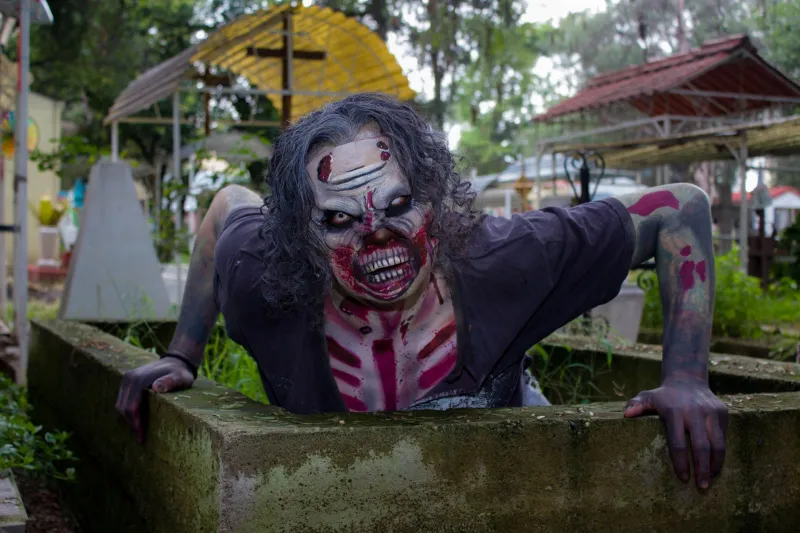
The smell hits you before anything else. Walk into a working practical effects studio — the kind scattered across industrial estates in Hertfordshire, South London, and the outskirts of Manchester — and you get this particular cocktail of silicone, acetone, and something vaguely biological that no amount of ventilation quite eliminates. It's the smell of monsters being born.
Britain has been building screen monsters for the better part of a century. From the Universal-influenced creature work of the early Hammer productions to the gleefully grotesque body horror of the 1980s, practical effects have been woven into the DNA of British horror filmmaking in ways that persist even now, in an era when a competent CGI artist with a decent laptop can conjure almost anything. The question the industry is wrestling with isn't whether practical effects still matter — anyone who's watched a digital creature fail to convince an audience already knows the answer to that — but how the craft evolves when the tools available have expanded so dramatically.
The Philosophical Divide
Spend any time talking to people who work in British creature design and you'll encounter a debate that runs surprisingly deep. On one side, you have the purists — artists who trained in foam latex and fibreglass, who learned their craft through apprenticeships at companies with long histories, and who remain convinced that nothing a computer generates can replicate the physical presence of a properly constructed practical creature. On the other, there are designers who see the purist position as romanticism, and who argue that the best modern creature work is inevitably a hybrid — practical foundations enhanced, extended, and occasionally replaced by digital elements.
What's interesting is that neither camp is wrong, exactly. The most persuasive arguments come from the middle ground: artists who are genuinely skilled in both disciplines and who make decisions based on what each specific project actually needs, rather than ideology.
"The problem with going full CGI on a creature," one effects supervisor — who has worked on several notable British horror productions — explained during a recent industry panel, "is that the actors don't believe in it. And if the actors don't believe in it, the audience won't either. There's something that happens when a performer is physically sharing space with a monster that you simply cannot fake in post-production."
That instinct — that physical reality produces a different quality of performance and therefore a different quality of fear — is increasingly being validated by audience responses. Horror fans, particularly in the UK where genre literacy tends to run high, are exceptionally good at detecting digital fakery. They're forgiving of visible seams and slightly stiff puppet movement in a way they simply aren't forgiving of weightless CGI creatures that drift through scenes without ever quite convincing you they're actually there.
The Studios Doing the Work
The British practical effects industry operates largely out of the spotlight, which is something of an occupational irony given how spectacular its output can be. A handful of studios have built serious reputations for creature work over the past decade, attracting projects from both domestic productions and international co-productions that specifically want British craftsmanship.
The influence of the older generation remains visible and acknowledged. Artists who trained at studios that supplied creatures to everything from BBC productions to major theatrical releases in the 1990s and 2000s are now running their own workshops, passing on techniques that are genuinely difficult to learn outside of a hands-on apprenticeship. Foam latex application, cable-and-rod puppet rigging, full-body suit construction — these are skills that live in the hands as much as the head, and the British industry has been relatively successful at maintaining the transmission of that knowledge even as the broader commercial landscape has shifted.
What the newer generation has added is fluency in digital tools. The best creature designers working in Britain today can build a concept in 3D software, 3D-print structural components, construct the practical suit or puppet around those components, and then provide clean reference data to a VFX team for any digital extension work needed. The pipeline between physical and digital has become genuinely seamless in a way it wasn't even ten years ago.
Iconic Designs and Why They Work
Ask genre fans to name British creature designs that have genuinely got under their skin in recent years and you'll get a revealing list. The designs that consistently come up share certain qualities: physical specificity, a sense that the creature has an internal logic and biology, and — crucially — something wrong about them that isn't immediately identifiable.
That last quality is harder to achieve than it sounds. The most effective horror creature designs operate at the edge of recognition — they're almost something familiar, and it's the almost that does the psychological damage. British designers seem to have a particular gift for this uncanny quality, possibly because British horror has always been more interested in dread than shock. A creature that makes you feel faintly wrong before it does anything threatening is more frightening, in the long run, than one that simply jumps out and screams.
Texture plays an enormous role in this. Practical creatures have texture that catches light in unpredictable ways, that shifts subtly with movement, that invites the eye to linger and find new details on repeated viewings. Digital creatures, even very good ones, often have a surface quality that reads as slightly too consistent, too resolved — the uncanny valley problem applied not to faces but to skin and hide and whatever unspeakable material a particular monster happens to be made of.
The Budget Reality and How Creators Navigate It
None of this comes cheap, which creates genuine pressure in an industry where horror productions frequently operate on tight margins. Practical creature work is labour-intensive and material-intensive in ways that don't compress easily. A full creature suit with articulated facial features, multiple backup components, and the rigging needed to operate it can represent a significant chunk of a modest horror film's entire budget.
The response from the more resourceful end of the industry has been creative constraint as a design principle. Some of the most effective British creature designs of recent years have been deliberately partial — a limb, a silhouette, a suggestion of something larger that the audience's imagination completes far more terrifyingly than any complete reveal could manage. This is, of course, exactly the approach that made Jaws work in 1975 when the mechanical shark kept malfunctioning, and it's a lesson the British horror industry has absorbed thoroughly.
What's clear, talking to the people actually doing this work, is that the passion hasn't dimmed. These are artists who genuinely love monsters — who grew up watching the Hammer films and the Amicus anthologies and the BBC ghost stories, who chose this specific, peculiar, slightly smelly craft because nothing else felt as alive to them. British horror has always run on that kind of obsessive love. The creatures are better for it.