Scarred for Life and Loving It: Why 1980s British TV Horror Has Got Its Hooks Into a New Generation
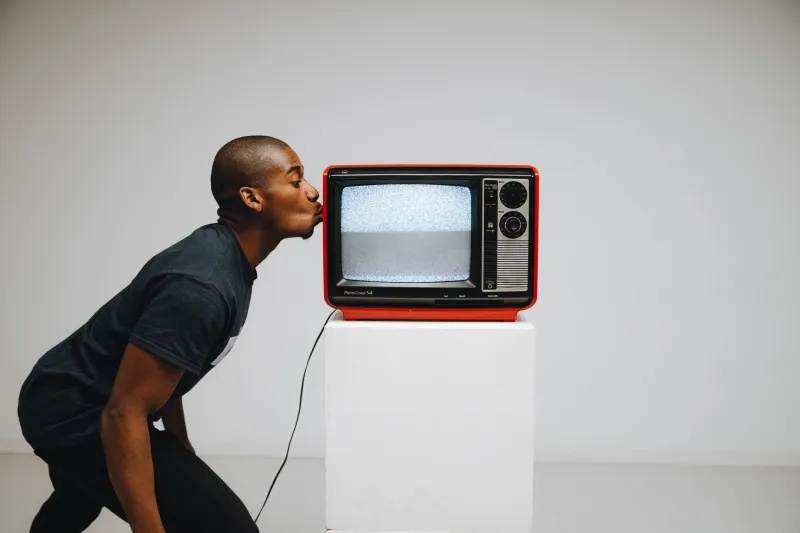
Ask anyone who grew up in Britain in the 1980s to name something that frightened them as a child, and you'll get a very specific kind of answer. Not Nightmare on Elm Street. Not The Thing. More likely it'll be a half-remembered children's television programme with a wrongly-angled camera and a synthesiser score that made your stomach drop. Or a BBC drama that aired well past your bedtime but that you caught the tail end of anyway, and which lodged itself somewhere deep in the back of your brain where it's been quietly doing damage ever since.
This is the texture of 1980s British television horror — and right now, it's experiencing a full-blown cultural resurrection.
The Shows That Built a Generation's Nightmares
To understand the obsession, you need to understand what the material actually was. British television in the 1980s produced horror content across an unusually wide spectrum, from children's programming that would make modern safeguarding teams break into a cold sweat, to adult dramas of genuine psychological sophistication.
On the children's side, shows like Chocky (ITV, 1984), adapted from John Wyndham's novel, and the deeply unsettling The Owl Service (a 1969 production that was still being reshown and discussed throughout the 1980s) established a tradition of treating young audiences as capable of handling genuine existential dread. Children of the Stones (1977, but endlessly repeated throughout the eighties) traumatised an entire generation with its folk horror premise and its refusal to offer comfortable resolution. More recently rediscovered is The Box of Delights (1984), which balanced Christmassy warmth with imagery genuinely disturbing enough to give adults pause.
For older viewers, the decade produced a run of adult horror drama that has aged remarkably well. The BBC's Ghost Story for Christmas strand, which ran through the seventies and into the eighties, brought M.R. James adaptations to a mass audience with a minimalist aesthetic that remains more effective than most contemporary horror filmmaking. Lawrence Gordon Clark's direction of these stories — all long takes, ambient sound, and the creeping sense that something is watching — established a visual grammar for British horror television that still influences working directors today.
Why Now? The Psychology of Retro-Dread
The question worth asking is why this particular era, and why this particular moment. Horror nostalgia isn't new — every generation revisits the scary things of its childhood. But the 1980s British television revival feels qualitatively different from, say, the general enthusiasm for 1980s American horror that Stranger Things helped to ignite.
Part of it is aesthetic. 1980s British television has a very specific visual quality: the slightly washed-out colour palette of videotape recording, the location filming in genuinely unremarkable British settings — council estates, suburban semis, provincial market towns — that makes the supernatural intrusions feel viscerally close to home. There are no Gothic mansions here, no exotic Transylvanian landscapes. The horror happens in places that look like where you actually live, which is considerably more disturbing.
There's also the question of tone. Contemporary horror, even very good contemporary horror, tends to be self-aware in ways that can undercut genuine unease. 1980s British television horror was made by people who seemed to genuinely believe in the stories they were telling. There's an earnestness to Threads (1984), to The Nightmare Man (1981), even to something as relatively mainstream as the ITV Dracula adaptations of the period, that contemporary audiences seem to find both refreshing and deeply unsettling precisely because of its sincerity.
For younger viewers who didn't experience this material the first time around, there's an additional dimension: the pleasure of encountering horror that doesn't look like anything else currently being made. In an era of algorithmically optimised streaming content, something with actual rough edges feels genuinely transgressive.
The Creators Carrying the Torch
The influence of this era on contemporary British horror creators is increasingly visible and openly acknowledged. Writer and director Prano Bailey-Bond, whose debut feature Censor (2021) was steeped in the video nasty panic of early 1980s Britain, has spoken in interviews about the specific texture of British television of the period as a formative influence — not just the horror content itself, but the way ordinary British life was represented, which makes the dark intrusions all the more effective.
Mark Gatiss, who has been instrumental in reviving the Ghost Story for Christmas tradition through his own BBC productions, is perhaps the most prominent champion of this particular heritage. His adaptations of M.R. James stories have been careful to preserve the minimalist aesthetic of the Lawrence Gordon Clark originals while making them accessible to audiences encountering the material fresh. The fact that these new productions have found substantial audiences among younger viewers suggests the approach is working.
Online, communities devoted to rediscovering and discussing this material have grown substantially. The British Film Institute's ongoing work to restore and release archive television content has made previously hard-to-find material accessible to audiences who'd previously only heard it discussed in hushed, reverential tones. YouTube channels dedicated to obscure British television horror have accumulated subscriber counts that would have seemed unimaginable a decade ago.
The Threadbare Aesthetic as Feature, Not Bug
One of the more interesting aspects of the contemporary enthusiasm for this material is how audiences have come to read its technical limitations. Low budgets, location constraints, and the specific visual qualities of 1970s and 80s broadcast television were once considered drawbacks. Now they're understood as constitutive elements of the aesthetic — inseparable from what makes the material frightening.
There's something in the grain of the image, in the slightly-too-loud ambient sound, in the flat lighting of studio interiors, that feels almost documentary in its immediacy. When something horrible happens in these productions, it doesn't feel like a special effect. It feels like something that was recorded happening. This is, rationally, absurd — but horror has never been about rationality.
Contemporary productions attempting to capture this quality face an interesting challenge: how do you authentically reproduce an aesthetic that was originally the product of limitation rather than choice? Several recent British horror productions have attempted this with varying degrees of success, but there's a general sense in the community that the most effective approach is to absorb the influence rather than directly replicate the look.
More Than Nostalgia
What's ultimately most interesting about the 1980s British television horror revival is that it doesn't feel, at its core, like nostalgia in the conventional sense. Nostalgia implies a longing for something warm and comforting. Nobody is watching Threads because it makes them feel cosy about the past.
What audiences seem to be responding to is something else: a period when British television was willing to use horror as a genuine vehicle for social and psychological anxiety, when the genre wasn't cordoned off into a safe entertainment category but was understood as capable of doing real, serious cultural work. The 1980s were, in Britain, a decade of profound social fracture — and the horror television of the period reflects that with an honesty that feels, from our current vantage point, almost radical.
Perhaps that's the deepest reason for the obsession. In an era that has its own profound anxieties, there's something both comforting and galvanising about art that looked at the darkness directly and didn't look away.