Beyond Hammer: How a New Wave of British Directors Is Scaring the World on Their Own Terms
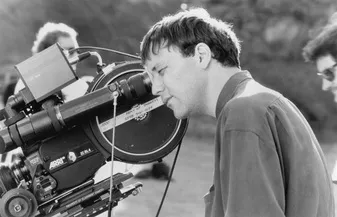
Photo: British independent horror film director on set moody cinematography, via imwithgeekarchive.weebly.com
There's a certain image that clings to British horror like damp fog on a November morning. Peter Cushing adjusting his cravat. Christopher Lee baring his fangs in a Berkshire mansion dressed up as Transylvania. Hammer Films, for all its glorious excess, cast a long shadow — one that took decades to fully step out of.
But step out of it we have. Quietly, almost without fanfare, a generation of UK filmmakers has been dismantling those old conventions and building something altogether more unsettling in their place. And the global audience? They're absolutely lapping it up.
The A24 Effect and Why British Filmmakers Are Ready for It
When American distributor A24 started reshaping what prestige horror could look like — think Hereditary, Midsommar, The Witch — it didn't just change the conversation in the States. It sent a signal to independent filmmakers everywhere that slow-burn, psychologically layered horror had a genuine market. British directors, many of whom had been making exactly that kind of work on shoestring budgets for years, suddenly found themselves aligned with a cultural moment.
Rob Savage is perhaps the most visible example of this shift. His 2020 lockdown-era film Host — shot entirely over Zoom, produced for a fraction of what most short films cost — became a genuine global phenomenon. Savage didn't have a studio behind him. He had a laptop, a small cast of friends, and an instinct for what makes modern audiences genuinely uncomfortable. The result was one of the most-discussed horror films of its year, landing him a deal with Blumhouse and a profile that extends well beyond these shores.
What's striking about Savage's trajectory isn't just the success — it's the method. Host is deeply rooted in a very British kind of mundanity: the awkward video call, the cramped flat, the polite scepticism about the supernatural that dissolves into blind panic. It's horror that couldn't have come from anywhere else, yet it resonated with audiences from Seoul to São Paulo.
Streaming Platforms: The Great Equaliser
For a long time, getting a British horror film made meant navigating a fairly narrow set of gatekeepers. The BFI, Film4, BBC Films — all vital institutions, all operating with limited budgets and understandably cautious mandates. Brilliant work came out of that system, but plenty of genuinely exciting projects never made it past the development stage.
Streaming has changed the maths considerably. Netflix, Shudder, and Amazon Prime have all demonstrated an appetite for international horror content, and British filmmakers have been quick to take advantage. Shudder in particular has become something of a spiritual home for UK genre work, picking up titles that might otherwise have struggled to find distribution beyond the festival circuit.
The platform model also suits the kind of stories British horror directors tend to want to tell. A contained, character-driven horror film with a distinctive visual language and a running time under 90 minutes is exactly what streaming audiences respond to — and it's exactly what directors like Corinna Faith (The Power) and Charlotte Colbert (She Will) have been delivering.
What Makes It Distinctly British?
It's worth asking what, precisely, makes contemporary British horror feel different from its American or European counterparts. The answer isn't straightforward, but a few threads keep appearing.
Class anxiety is one. British horror has always had an uneasy relationship with social hierarchy, and that hasn't changed. Films like Get Out drew comparisons to British class horror for good reason — the sense of being an outsider in a system designed to consume you is a very familiar feeling on this side of the Atlantic. Directors like William McGregor (Gwen) and Ben Wheatley — whose work spans Kill List, A Field in England, and In the Earth — consistently return to the grinding weight of economic and social pressure as a source of dread.
Then there's the landscape. Britain is a small island, but it contains multitudes of unsettling geography. The moors, the fens, the crumbling seaside towns, the post-industrial estates. These are settings that carry history and unease in equal measure, and British filmmakers are increasingly willing to let that environment do heavy lifting in the narrative.
Finally, there's a particular strain of dark humour — wry, understated, occasionally pitch-black — that runs through even the most serious British horror. It's not comedy exactly, but it's a tonal quality that gives British genre work a distinctive texture. Audiences recognise it as authentic, even when they can't quite name what they're responding to.
The Funding Revolution
Beyond streaming, the crowdfunding and micro-budget revolution has opened doors that simply didn't exist a decade ago. Horror, more than almost any other genre, lends itself to low-budget production — darkness is cheap, atmosphere costs nothing, and a good script can outperform a massive effects budget every single time.
Organisations like the Horror Channel's FrightFest have also played a crucial role, providing a platform for emerging British talent and connecting filmmakers with distributors who might otherwise never have encountered their work. The festival ecosystem — FrightFest, Arrow Video FrightFest, Grimmfest in Manchester — has become a genuine launchpad rather than just a celebration of existing work.
What Comes Next?
The honest answer is that nobody quite knows, and that's rather exciting. The pipeline of British horror talent coming through right now is as varied as it's ever been — in terms of background, perspective, and the kinds of stories being told. Horror has historically been one of the more welcoming genres for filmmakers from outside the traditional industry routes, and that democratising tendency is only accelerating.
What seems certain is that the global appetite for distinctly British horror isn't going anywhere. There's something about the particular flavour of dread this country produces — rooted in history, soaked in rain, shot through with dark wit — that travels extraordinarily well.
Hammer built an empire on it. The new generation is building something different: smaller, stranger, and in many ways more frightening. And they're doing it entirely on their own terms.